
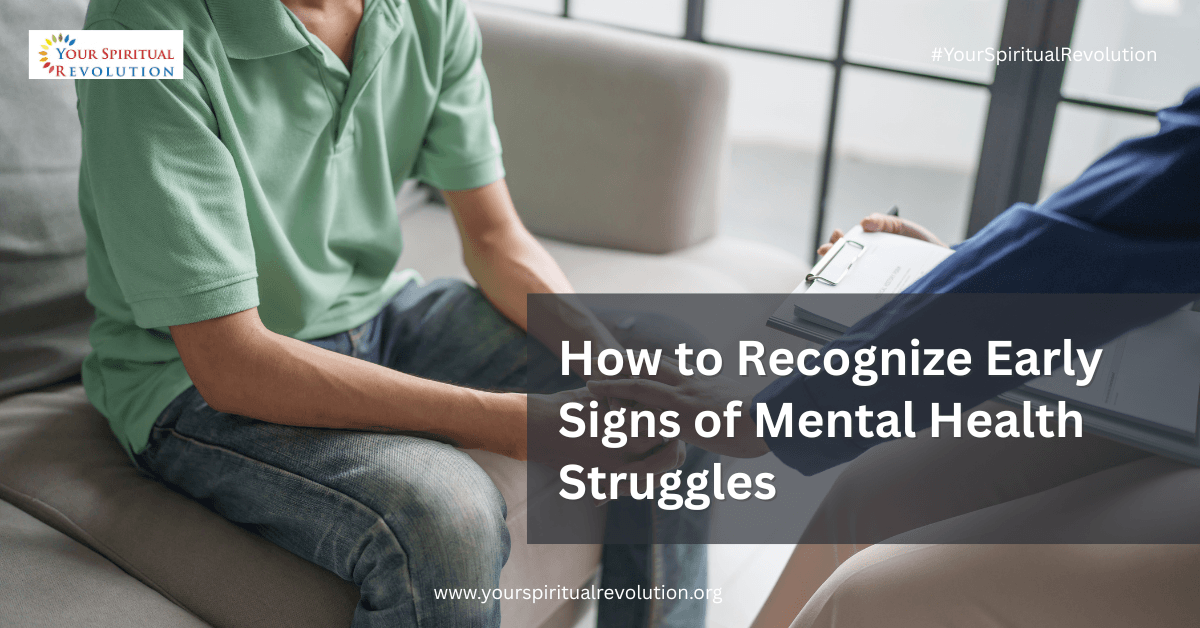
Mental health challenges don’t usually appear overnight. They often begin with small changes—subtle shifts in how you think, feel, or behave. These early signs can be easy to overlook, especially when life gets busy.
But paying attention to these changes matters.
When you recognize the early signs of mental health struggles, you give yourself the opportunity to respond with care, not crisis. And with the right support, things can improve before they become overwhelming.
But paying attention to these changes matters.
When you recognize the early signs of mental health struggles, you give yourself the opportunity to respond with care, not crisis. And with the right support, things can improve before they become overwhelming.
Why Early Recognition Matters
Mental health conditions are common, and many people experience them at some point in their lives.
Despite how common these challenges are, many people wait too long to seek help. Early recognition can:
- According to the World Health Organization, 1 in 8 people globally live with a mental health condition.
- In the U.S., nearly 1 in 5 adults experience mental illness each year (National Alliance on Mental Illness).
Despite how common these challenges are, many people wait too long to seek help. Early recognition can:
- Prevent symptoms from worsening
- Improve long-term outcomes
- Make recovery more manageable
What Do Early Signs Look Like?
Mental health struggles don’t always look the same. They can show up in your thoughts, emotions, behaviors, and even your physical health.
Let’s break them down.
Emotional Signs to Watch For
Your emotions are often the first place where changes appear.
You may notice:
These feelings may come and go at first, but over time, they may become more consistent.
You may notice:
- Feeling sad, empty, or low for long periods
- Increased anxiety or constant worry
- Irritability or frustration over small things
- Feeling overwhelmed by everyday tasks
- Loss of interest in things you once enjoyed
These feelings may come and go at first, but over time, they may become more consistent.
Changes in Thinking Patterns
Mental health struggles can affect how you think and process information.
Common signs include:
You might also find yourself expecting the worst, even in situations that used to feel manageable.
- Negative or self-critical thoughts
- Difficulty concentrating or making decisions
- Racing thoughts or constant mental noise
- Feeling stuck or unable to move forward
You might also find yourself expecting the worst, even in situations that used to feel manageable.
Behavioral Changes
Sometimes, the clearest signs show up in your actions.
Look for changes like:
These changes may happen gradually, making them easy to miss at first.
Look for changes like:
- Withdrawing from friends or family
- Avoiding responsibilities or social situations
- Changes in daily routines
- Increased use of unhealthy coping habits
- Difficulty staying motivated
These changes may happen gradually, making them easy to miss at first.
Physical Signs You Shouldn’t Ignore
Mental health doesn’t just affect your mind—it can also impact your body.
Physical symptoms may include:
According to the American Psychological Association, stress and emotional challenges often show up as physical symptoms, highlighting the strong connection between mind and body.
Physical symptoms may include:
- Trouble sleeping or sleeping too much
- Fatigue or low energy
- Changes in appetite
- Headaches or unexplained aches
- Muscle tension
According to the American Psychological Association, stress and emotional challenges often show up as physical symptoms, highlighting the strong connection between mind and body.
Social and Relationship Changes
Mental health struggles can affect how you connect with others.
You may notice:
Over time, this can lead to isolation, which may make symptoms feel worse.
- Pulling away from loved ones
- Feeling disconnected or misunderstood
- Increased conflict in relationships
- Difficulty communicating your feelings
Over time, this can lead to isolation, which may make symptoms feel worse.
Subtle Signs That Are Often Overlooked
Not all signs are obvious. Some are quiet but important.
These include:
These signs may not seem serious at first, but they can be early indicators of deeper challenges.
- Losing interest in personal goals
- Feeling numb instead of emotional
- Overworking or staying constantly busy to avoid feelings
- Difficulty relaxing or feeling “on edge” all the time
These signs may not seem serious at first, but they can be early indicators of deeper challenges.
When Do These Signs Become a Concern?
Everyone experiences stress or emotional ups and downs. But it may be time to pay closer attention when:
- Symptoms last for several weeks
- They interfere with your daily life
- They affect your relationships or work
- You feel unable to cope on your own
Early support can make a meaningful difference.
The Link Between Early Signs and Long-Term Mental Health
Ignoring early signs can allow mental health challenges to grow more complex over time.
For example:
According to the National Institute on Drug Abuse (NIDA), mental health challenges and substance use often develop together, especially when early symptoms are not addressed.
- Ongoing stress may develop into anxiety
- Persistent sadness may lead to depression
- Emotional struggles may increase the risk of substance use
According to the National Institute on Drug Abuse (NIDA), mental health challenges and substance use often develop together, especially when early symptoms are not addressed.
What You Can Do If You Notice These Signs
Recognizing early signs is an important step—but knowing what to do next matters just as much.
1. Check In With Yourself
Take time to notice how you’re feeling.
Ask yourself:
Self-awareness can help you respond more effectively.
Ask yourself:
- What has changed recently?
- What feels different in my daily life?
- What might be contributing to these feelings?
Self-awareness can help you respond more effectively.
2. Talk to Someone You Trust
You don’t have to carry everything on your own.
Talking to a friend, family member, or someone you trust can:
- Help you feel understood
- Provide a different perspective
- Reduce feelings of isolation
3. Focus on Small Daily Habits
Simple habits can support your mental well-being.
Try to:
Small changes can have a big impact over time.
Try to:
- Get enough rest
- Eat regularly
- Stay physically active
- Take breaks when needed
Small changes can have a big impact over time.
4. Set Realistic Expectations
You don’t need to fix everything at once.
Focus on:
Focus on:
- One step at a time
- Progress, not perfection
- Being patient with yourself
5. Consider Professional Support
If symptoms continue or feel overwhelming, professional support can help.
Therapy and counseling can provide tools to:
- Understand your thoughts and emotions
- Build healthier coping strategies
- Improve overall well-being
You Are Not Alone
It’s easy to feel like you’re the only one going through this—but that’s not the case. Many people experience early signs of mental health struggles, and many find their way to support and healing.
Reaching out is not a sign of weakness. It’s a step toward taking care of yourself.
Final Thoughts
Recognizing early signs of mental health struggles can help you take action before things become more difficult. These signs are not something to ignore—they are signals that your mind and body may need attention and care.
You deserve support that is understanding, respectful, and focused on your well-being.
And most importantly, you deserve the chance to feel better.
You deserve support that is understanding, respectful, and focused on your well-being.
And most importantly, you deserve the chance to feel better.
Sources
1. World Health Organization (WHO)
https://www.who.int/news-room/fact-sheets/detail/mental-disorders
2. National Alliance on Mental Illness (NAMI)
https://www.nami.org/mhstats
3. American Psychological Association (APA)
https://www.apa.org/topics/stress
4. National Institute on Drug Abuse (NIDA)
https://nida.nih.gov/research-topics/comorbidity
5. Centers for Disease Control and Prevention (CDC) – Mental Health
https://www.cdc.gov/mentalhealth