
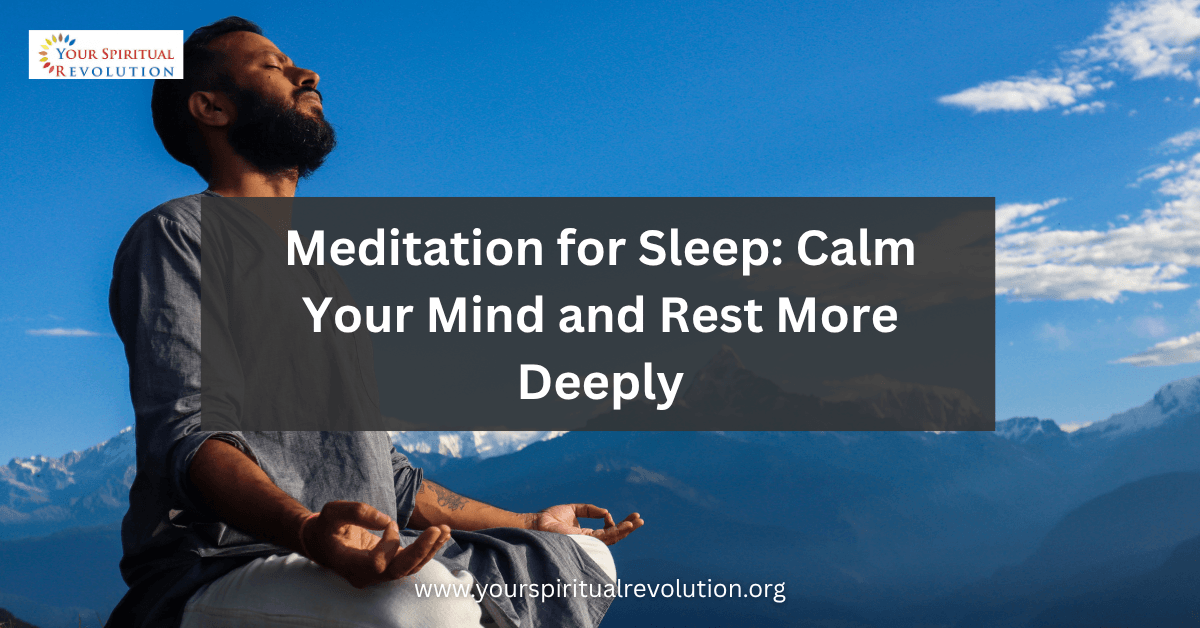
Meditation for Sleep Calm Your Mind and Rest More Deeply

Meditation for Sleep: Calm Your Mind and Rest More Deeply

You get into bed hoping for rest, but your mind keeps working. You review what you said today and plan what you must do tomorrow.

Your body feels tired, yet your thoughts stay active. Each new thought makes it harder to drift off, and watching the clock adds pressure.

A brief practice of meditation for sleep can help you break that cycle. You give your attention one steady focus, and your body receives a clear signal to unwind.

Why It Works

During the day, your nervous system stays ready for action. You think fast, react quickly, and solve problems. That alert mode is useful in daylight, but it can linger past bedtime. Your mind keeps scanning even when you want to rest.

This type of practice gives your system a different message. Slow breathing and steady attention can help calm the nervous system and support the shift from an alert state to a restful one.

You are not trying to empty your mind. You are giving your mind something calm to follow, such as your breath or a quiet count.

When other thoughts arise, you notice them and return to that focus. Your muscles may soften, your breathing may slow, and sleep may come with less effort. Short sessions can help, so you do not need a long routine to start.

A Simple Bedtime Practice

Set aside 10 to 15 minutes in bed. Keep lights low, keep your phone out of reach, and allow yourself to move slowly.

1. Settle into position. Lie on your back with your arms at your sides and your legs extended. Close your eyes and feel the weight of your body resting on the mattress.

2. Slow your breath. Breathe in through your nose for a count of four. Breathe out through your mouth for a count of six, keeping each breath smooth and even.

3. Relax your body from head to feet. Soften your forehead, eyes, and jaw. Release your shoulders, arms, and hands, then loosen your chest, stomach, legs, and feet.

4. Count your exhales to steady attention. Count one on the first exhale, two on the second, and continue to ten, then start again at one. If a thought pulls you away, return to the next number without criticism.

5. Let go when drowsiness arrives. Stop counting and rest with natural breathing. Allow sleep to come when it is ready, without checking or trying.

If you wake in the night, you can repeat the slow breathing and counting for a few minutes. Use the same steady pace and the same attitude of patience.

If ten counts feel too long at first, start with five. The number matters less than the rhythm of returning.

Set Up Your Space for Rest

Your room can make your practice easier or harder. Keep it cool, dark, and quiet so your body can unwind. Use dim light in the hour before bed. Turn off bright screens, close curtains fully, and use earplugs or a fan if outside noise breaks your focus.

Choose bedding that feels comfortable against your skin and keeps you at a steady temperature. A room that feels crowded or warm can keep your mind active. Keep your bedtime fairly regular, even on weekends, so your body learns the pattern.

Your mattress also plays a role. A supportive surface that fits your sleep position can help reduce tossing and turning through the night.

If your bed feels worn or unsupportive, you can find helpful ideas for a supportive mattress and restful bedroom at Qomfort Sleep. Small upgrades to comfort, light, and sound may help your nightly practice work better.

A Calm Close

Meditation for sleep is a skill that grows with repetition. Keep your routine simple, practice for a few nights in a row, and let deeper rest build over time. You may find that quiet evenings feel easier and mornings feel clearer.
About The Author
Share:

Leave a Reply

Leave A Comment*

We'd love to hear from you!

Recent Blogs

The Sacred Rays of God

The Sacred Rays of God

Introduction My memory remains vivid across dimensions and lifetimes—standing on the crystalline shores of Venus,