In my nonfiction I’ve defined “cult” in a manner that purposely moves light years beyond typical, egregious examples to encompass society itself—fundamentally linking hive-minded cultism to systemic social engineering and control.
In this article I invite you to spend some quality time with me appreciating the deeply cultish nature of the Gameboard of “reality” and how to navigate it in the healthiest and most successful ways possible.
There’s an external as well as internal mechanism for how the World Cult is created and sustained, but for present purposes I’ll restrict my observations to the externally based vector that architects human civilization: a phenomenon mapped out in the work of René Girard called mimetic desire.
Exploitation of this psychological weakness common to our species is apparently a main rationale for the proliferation of commercialism and capitalism over the past century. During this period the spellcasters atop the global control pyramid have masterfully weaponized mass media as a carrier wave for instilling a socially divisive and energy-draining materialist(ic) CULTure in the masses.
The singularly effective belief-installation strategy of mimetic desire entrains World Cultists (through a variety of means both subtle and obvious) into something akin to mass self-hypnosis.
This situation goes a long way toward explaining why most people unthinkingly accept one-sided, irrational and often downright self-sabotaging ways of cognizing in line with the skewed perceptions common to the sub-cults to which they belong.
Despite their many differences and disagreements, these sub-cults are a lot like Russian dolls nested inside one another … until you get to the biggest one that encompasses all the others: the World Cult.
We’re talking invisible centralized control on an epic, Machiavellian scale. Whether large or small, all cults employ forms of self-policing via internal government—a word that, etymologically considered, many researchers maintain means “mind control.” But even if it doesn’t, it darn well should, given the 24/7 “narrative as news” the human herd is exposed to daily via its mesmerizing feeds.
Quite simply, mimetic desire regulates what is acceptable to think—and, by extension, say and do. It has always been this way, of course. But now, with the internet’s ability to “enter” so as to put a “net” around the user’s mind, the situation is reaching truly epidemic proportions.
If you’re a member of any society anytime, anywhere (but especially today’s so-called civilized version), you qualify—virtually by definition—as a de facto cult member whose belief system has been cleverly molded by waves of intensive indoctrination.
For those who fancy themselves immune to, or somehow above, such pernicious influence, consider these words of warning from Aldous Huxley:
“The nature of psychological compulsion is such that those who act under constraint remain under the impression that they are acting on their own initiative. The victim of mind-manipulation does not know that he is a victim. To him the walls of his prison are invisible, and he believes himself to be free. That he is not free is apparent only to other people.”
Cult membership doesn’t usually come with an ID card. Passionate unofficial adherence to the ideology of any type of informal “club”—a team fan base, a gender affiliation, a religious persuasion, an affinity group—is tantamount to cult membership. The membership’s emotional charge, not participation in the group per se, is the problem.
Charge indicates that you’re plugging your personal “battery” into the larger cult power grid. There’s only one way this ends for you: badly.
The primary purpose of cults, at all levels, is twofold. First, they’re here to harvest your loosh, your personal energy, for purposes that do anything but serve your own or humanity’s best interests.
Secondly, and just as critically, cults are engineered to literally manage your mind. Specifically, they’re designed to do so in such a way as to keep you from realizing your own godlike imaginative power while imagining (oh, the irony) that you’re in control of your own thoughts.
The Wizard behind the curtain of “reality” knows that just one fully self-realized imagineer (never mind a whole playfully empowered platoon of them) is a major risk factor that could bring its house of cards crashing down—and it can’t have that.
Consider that every neighborhood, sports team, university, political party and even online community is a mini-fiefdom, each enforcing its own official or hidden rules and collecting energy (taxes/loyalty/energy) from its citizens/members.
This intentionally downplayed dynamic powers a massive, underlying, remote-controlling system. Like a Great Vampire Squid, to use Matt Taibbi’s memorable imagery, this worldwide energy sucker encompasses and connects all sub-cults.
Cults often ingeniously employ subtle but amazingly effective methods of manipulation and energy extraction. Arguably, the most pernicious cults getting off scot-free with this are the social chameleons.
These are particularly insidious because they pose as “natural” groupings of people for seemingly “normal” purposes that no one in their “right mind” should ever question.
Below are the key cultish dead giveaways to be on the lookout for …
Mindlessness: All cults, regardless of type, cultivate unquestioning acceptance of sometimes unproven, usually absurd and often self-destructive ideas and acts. If something doesn’t make sense, it doesn’t mean you’re stupid to question it.
Groupthink: Cults foster a collective confirmation bias that replaces individual thought and sovereignty with what George Orwell called groupthink. “Whenever you find yourself on the side of the majority,” advised Mark Twain, “it is time to pause and reflect.”
“Truthers”: These petty cults of the “alternative” media especially endanger “smart” people. “Truthers” lure in curious minds while often using one-sided and/or apocalyptic narratives to channel group energy in the direction of imbalance and even disaster. Typically, “truthers” focus on outside “solutions” that serve as distractions from the genuine spiritual work of increasing personal power and mastering imagination.
Foot Soldiers: One of the biggest dangers with cults isn’t the leader(s), however cringe or nauseating; it’s the robotic foot soldiers who blindly believe in them and mechanically do their dirty work.
Charge: In addition to modifying social behavior, cults are fundamentally organized to harvest your energy, making the emotional investment of members a primary indicator of risk.
Duality: This widespread social engineering mechanism ensures that cults of all shapes and sizes adhere to a similar script by forcing people into warring camps of “right” versus “wrong.”
It’s also useful to learn to recognize common behaviors of cult leaders such as …
Abuse: Bullying, intimidation, threats of violence, shaming (public and private), and scapegoating followers or students.
Ego and Control: Narcissism, egocentrism, ethnocentrism, territoriality, tribalism, toxic masculinity and femininity, and control issues.
Rigidity: Intolerance, close-mindedness, pretense of having all the answers, the need to be right, and the need for others to be wrong.
Deceit and Instability: Breaking promises or contracts, doublespeak, paranoia, overreactivity, self-pity, and crocodile tears.
A popular meme I recently shared online that generated a lot of enthusiastic feedback stated simply, “The real teacher will send you back to yourself.”
When you don’t see this happening in someone you’re invested in following, there’s a good chance you’re dealing with a cultist of some stripe. My advice? Run. Run for your life.
The goal of identifying the above typical characteristics of cults and cult leaders (which also apply to cult handlers) is to recognize the mechanism of oppression and take appropriate action to distance yourself—energetically, emotionally, and even physically.
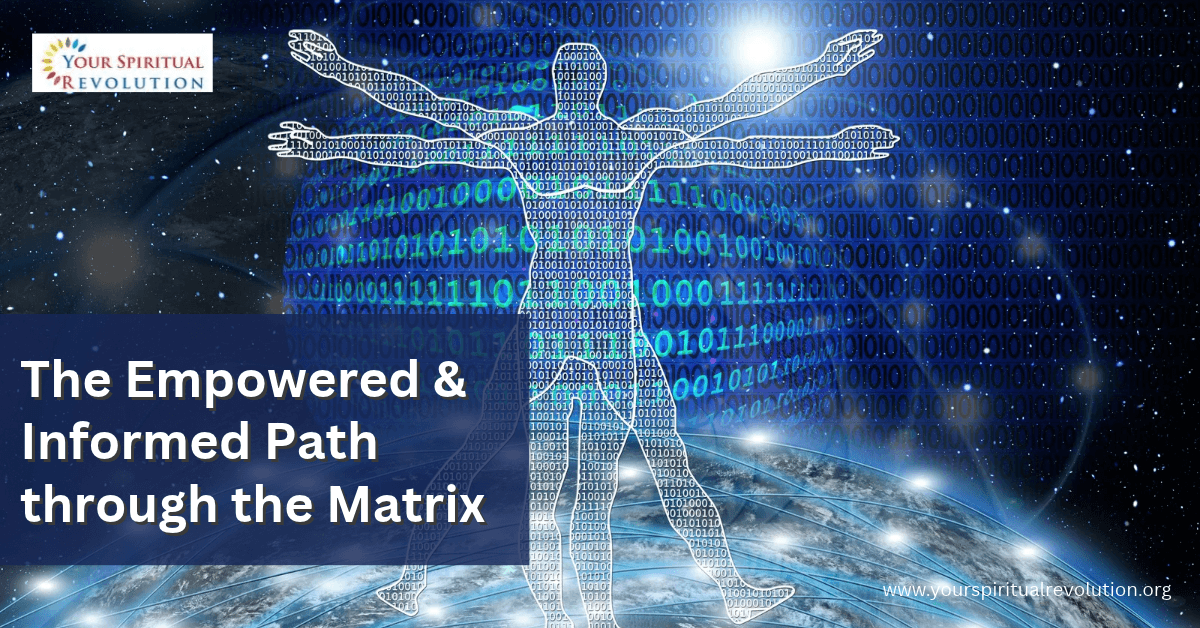
In this observer-generated holographic construct most mistake for reality, what we think of as the real is actually a complex quantum system, an adaptable dreamscape—interchangeably referred to as a simulation or simulacrum. This Matrix is centrally managed by the World Cult.
Steered by mimetic desire, the collective generates consensus reality by imbuing this construct’s Gameboard with enormous amounts of relatively stable observational energy—the stuff that not just worldviews but worlds themselves are made of.
This creative group power, a kind of groupthink strong enough to create and sustain massive thought-forms at the level of human civilization, is hijacked by a parasitic consciousness we might think of as the fraudulent Architect of the Matrix. This entity both feeds on and channels individual and mass power to bring about its own designs.
In a plot twist worthy of the best science fiction, the Architect can’t actually edit the construct it has co-opted because—though immensely powerful—it lacks the faculty of imagination that allows beings such as ourselves to dream worlds into being.
Therefore, much like the Architect in the movie The Matrix, the Architect I’m describing uses us as proxy builders of its own mental “reality” blueprints.
The dreamlike nature of this construct explains why two seemingly sober-minded cults can arrive at diametrically opposed conclusions based on “scientific” observation. The simulated dreamscape feeds different “evidence” and “facts” to each side supporting their manufactured ideologies.
The existence of innumerable, equally plausible yet totally contradictory scenarios (theories about 9/11, for example, or virology, or the shape of the earth) make it plain to anyone with eyes to see that no “real reality” could possibly behave in such forever mutually exclusive ways.
The idea that we inhabit a vast personal and collective dream is a foundational concept for personal as well as collective evolution of consciousness. As Wayne Dyer emphasized, you don’t “believe it when you see it.” To the contrary, you “see it when you believe it.”
First, acting alone or as part of a group, with or without awareness, you dream something—and then, and only then, does it come true. The more empowered and conscious you become in your dreaming, the more intentional and enjoyable your outcomes.
Our ability to purposely run down new dreams is tantamount to our capacity to consciously create new selves and living environments: in other words, to change our experience of the world, the looming shadow of the Architect notwithstanding.
Breaking free from the World Cult—to say nothing of definitively graduating from the Matrix—necessarily starts with dedicated preservation and reclamation of personal power.
While infinitely individualized, this path requires a lifestyle choice that prioritizes self-examination, energy management, and cultivation of inner strength.
For the sake of demonstration, I find it helpful to divide this process (somewhat roughly, admittedly) into two main phases.
The first is Understanding the Construct. To be in but not of the Matrix, and maybe someday escape it altogether, one must first recognize its true nature as an engineered environment and acknowledge one’s own indoctrinated status as a cult member whose energy helps sustain the dreamscape itself.
Next, grok the Architect’s dual role. On the one hand, our spiritual adversary seeks to subjugate and use humanity by installing an aspect of its own mind in the population, literally thinking our thoughts for us.
On the other hand, the Architect—knowingly or otherwise, on purpose or by accident—uses the refiner’s fire of its nexus of cults to turn up the heat on its controlees. Like frogs threatened with boiling, some of us are impulsed to jump out of our hypnotic bonds and become sovereign in body, mind, and spirit.
Finally, reject all psyops, including (critically) that of duality. In particular consider the possibility that the concept of “evil” (as dualistically paired with “good”) might just be the single biggest psychological operation in world history.
If your knee starts to jerk at the thought, spend a little time mentally rearranging EVIL’s letters until you pierce the VEIL of dogma.
Then you might be in a position to play around with the idea that what we conceptualize as evil is just a mental implant designed to disempower us by falsely placing agency and free will outside ourselves.
Allow me to mention in passing another absolute doozy of a psyop: “truth.” The idea that “the truth will set you free” simply makes no sense. The continuous clashing of opposing “truths” in the dualized Matrix of the World Cult keeps people everywhere whipsawed into antagonistic camps—rendering them lost, spent, ineffectual, and anything but free.
This second phase of mastering the Gameboard involves systematically increasing your commitment to noncompliance (developing social disobedience as a way of life) in actively withdrawing emotional and energetic investment from the World Cult.
Anyone running down a dream, even the most mundane variety, would do well to model this basic approach for guarding life force from being harvested. But the serious would-be escapee from the Matrix must make truly radical moves in this regard.
This revolutionary game plan starts with blowing up (metaphorically) the World Cult in our own lives in one giant explosion of just saying no and walking away in the spirit of Timothy Leary’s iconic advice to “Turn off, tune out, drop out.” Below are some of the most effective ways I’ve personally experienced to invoke the “nuclear option.”
Please keep in mind that these recommendations aren’t in any way meant to tell you how to live genuinely. You do you. I offer these self-development tips only in the interest of helping maximize your energy for healing, success, and other inner alchemy pursuits.
If you’re not triggered by at least one of my suggestions, I’m going to go out on a limb by saying you no longer need me. Here we go …
• Withdraw from Politics and Religion: Quit engaging in politics and political arguments (voting is a disempowering psyop). Stop going to any kind of church, as religion (even a “liberal” one) is one of the major cults used for loosh extraction. Again, I’m just the messenger.
• Unplug from Media and Education: Turn off mainstream as well as alternative news sources, which are basically just energy succubi. Consider dropping out of traditional programs (college is a quintessential mind-control institution). Experiment with unschooling by teaching yourself whatever you need to know.
• Minimize Superfluous Social Connections: At least until you learn how to safeguard your energy, get off or reduce time on social media. Let go of faux friends and frenemies who siphon off loosh through self-pity and selfishness.
• Limit Compliance Generally: Don’t go along to get along with anything official from the World Cult you don’t absolutely have to. Noncompliance and nonviolent resistance are time-honored paths to personal freedom.
• Take Charge of Your Own Health: Consider using conventional doctors only in emergencies or out of absolute necessity. “If you are not your own doctor,” said Hippocrates, the Greek physician widely acknowledged as the Father of Medicine, “you are a fool.” Allopathic medicine and diagnosis (a self-fulfilling prophecy) can be highly effective for loosh extraction. Plus, they can kill you. Google “iatrogenic death.” This isn’t medical advice and you should definitely consult your doctor before implementing it.
One of the most resonant and poignant books I ever read was Fred Chappell’s little storytelling masterpiece about growing up in Southern Appalachia, Brighten the Corner Where You Are.
The novel’s main point—if I can use that term for such an exquisitely nuanced work of art—was that the only truly empowering strategy for making the most of a far from perfect world isn’t to try to change it but merely to shine a light around yourself.
In spiritual circles we’re often taught that you “heal yourself to heal the world.” But upon reflection, perhaps a more precise phrasing might be, “Heal yourself to heal your world.” With this in mind, Leo Tolstoy flat-out nailed it when he observed, “Everyone thinks of changing the world, but no one thinks of changing himself.”
If you really want to put the Humpty Dumpty pieces of a fragmented Matrix existence back together, make yourself as whole as you can first and then watch as at least your small corner of the World Cult magically reconfigures itself around your coherent light.
Another meme I shared not long ago featured Agent Smith asking Neo why he insisted on persisting in the face of such great odds stacked against him. To which Neo replied (in the meme, not the movie): “Because I’m not internalizing my external reality, I’m externalizing my internal reality.”
Neo did ultimately succeed, at least in the first iteration of the franchise, in upgrading the Matrix. And he did so, of course, by first upgrading himself—or rather, the way he saw himself.
The meta-message? The observer effect runneth deep indeed to allow us to reinvent our very identity and take advantage of all the powers that come with our new self.
If your mimetic desire is to show the Architect who’s the final boss in this multiplayer video game, don’t waste your precious attention and energy fighting its World Cult. Just be who you want to be and watch your old dream recede in your rear view as you quickly catch up to a new one.
“Your visions will become clear only when you can look into your own heart,” said Jung. “Who looks outside, dreams; who looks inside, awakes.”
Emancipation from the Matrix requires traveling from dream to dream until we finally “wake up” in the dream of “reality” and realize we’re involved in creating every last bit of it.
Copyright © Sol Luckman. All Rights Reserved.