A chakra course supports daily self-care by teaching short, repeatable practices such as breathwork, grounding, mantra and journaling, organised around the seven main energy centers. The set order and guided lessons remove guesswork, so you can spend ten minutes a day checking in and notice patterns in your mood and energy over time.
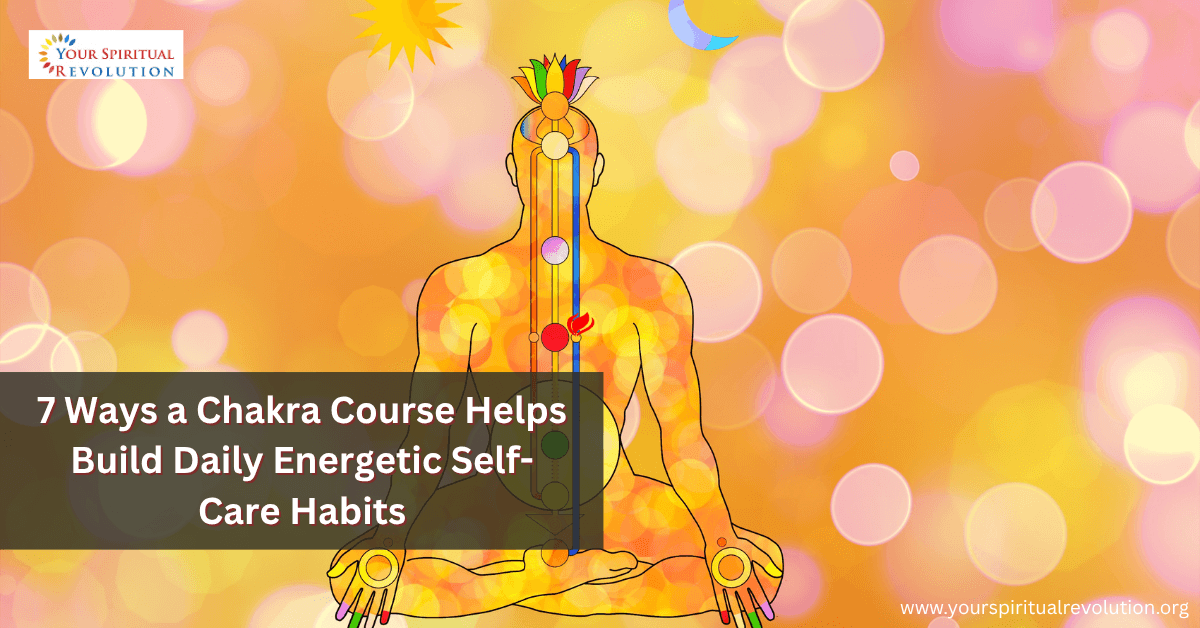
A chakra course is structured training in the chakra system, a framework that comes from Indian spiritual traditions. The word chakra is Sanskrit for wheel. Seven main centers run from the base of the spine to the crown of the head, each linked with themes such as safety, creativity, confidence, love, expression, intuition and connection.
Most courses mix background teaching with practical work: guided meditations, breathing techniques, reflective writing and simple exercises using sound or stones. Some are for personal growth alone. Others lead to a diploma for people who want to support clients later.
Ask yourself how you are and the honest answer is often “fine.” The seven centers give you sharper questions. Is my throat tight? Do my legs feel steady? Am I carrying worry in my stomach? A two-minute scan each morning tells you far more than a vague hunch
Big plans collapse by week two. A course shows how small a routine can be: a few slow breaths, a seed sound such as lam for the root or yam for the heart, and one line in a notebook. Short practices survive busy days.
Energy shows up physically first. After several weeks of regular attention, you start spotting early signals, like a clenched jaw before a hard conversation or the heaviness that arrives every Sunday evening. Catching these early usually means a small reset is enough
Reading about the heart center is pleasant. Sitting through a guided meditation for it, then writing down what came up, is what builds the habit. Good courses balance both, so knowledge becomes something your body remembers.
Most of us quit because we try everything in week one. A modular course has you spend time with the root before moving to the sacral, and so on. Each practice settles before the next arrives, and a missed week does not undo your progress.
Some days need stillness, others need movement, sound or writing. A course introduces breathwork, mantra, visualization, grounding and gentle movement, so you can match the tool to the day. Humming may suit a restless afternoon better than sitting in silence.
Habits last longer with other people involved. Assignments, tutor feedback and fellow students give your practice a place in your week. Hearing that someone else had the same experience also makes the work feel less private and less fragile.
Research on chakras as such is limited. Slow breathing and meditation, which sit at the heart of this work, do have research behind them for relaxation and stress. Treat energy work as support alongside medical and mental health care, never a replacement for it.
Habit research suggests an average of around two months, with a wide range from person to person. Ten minutes a day is enough to start, and consistency matters more than length.
No. Curiosity and a willingness to practise are enough. Many students come for stress management and self-awareness rather than any particular belief.
A meditation class usually teaches one technique. A chakra course covers a whole framework, combining breathwork, sound, visualization and reflection around seven energy centers.
No. Chakra practice supports relaxation and self-awareness. Please see a qualified professional for any persistent physical or mental health concern.
Daily practice of ten to fifteen minutes works better than one long weekly session, because regular repetition is what turns an activity into a habit.
Look for a clear syllabus, recognised accreditation, practical exercises, tutor support and honest claims about what the training can and cannot do.
Daily self-care sticks when it is simple, guided and shared, and a good chakra course offers all three. Soul Awakening Academy is a UK-based, accredited online training provider that has supported coaches and holistic practitioners for years, and its Chakra Balancing Diploma gives beginners and practitioners a clear, self-paced route into this work.