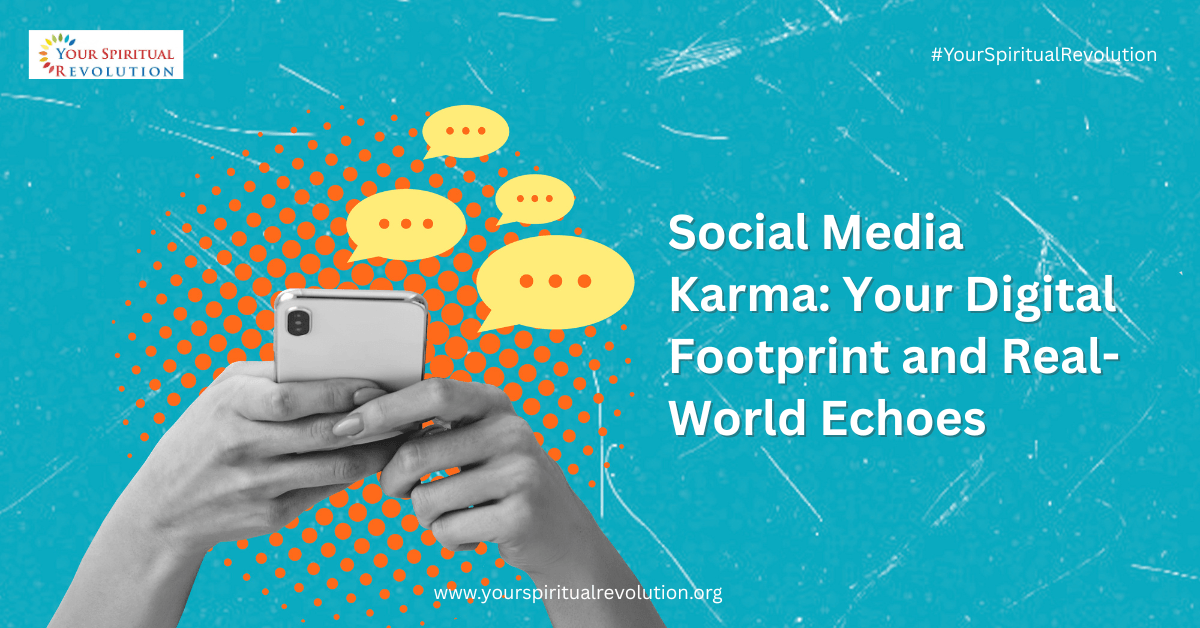
In an increasingly interconnected world, the ancient concept of karma finds a modern parallel in our social media interactions. Every post, comment, and share creates a digital ripple, influencing reputations, relationships, and even real-world outcomes. This article explores how our online actions, both positive and negative, manifest as a unique form of ‘digital karma,’ shaping our experiences in the vast digital landscape.
The Digital Echoes of Karma Online Actions and Real-World Repercussions
The ancient spiritual principle of karma, a fundamental tenet across many philosophies, posits a universal law of cause and effect where intent and actions influence future outcomes. At its core, karma dictates that “what goes around, comes around,” implying that every deed, word, and thought initiates a ripple that eventually returns to its originator, shaping their destiny. This age-old wisdom finds a potent and accelerated manifestation in the contemporary landscape of social media.
Social media platforms act as an unparalleled amplifier for these karmic principles. Their inherent characteristics – instantaneous global reach, the rapid, often viral amplification of content, and the creation of a persistent, virtually indelible digital footprint – mean that the consequences of online actions are no longer slow-burning or localized. Instead, social media accelerates the “return” of these actions, making repercussions more immediate, widespread, and impactful than ever before. The digital realm compresses the time between cause and effect, turning abstract karmic principles into tangible, real-time feedback loops.
The manifestations of this “digital karma” can be broadly categorized into positive and negative outcomes.
Positive Digital Karma accrues from actions like sharing insightful, valuable, and verified content, offering genuine support and encouragement to others, promoting positive causes and philanthropic efforts, actively fact-checking information before dissemination, engaging in thoughtful and respectful discourse, and celebrating others’ successes. These actions lead to an enhanced personal and professional reputation, the building of strong professional networks founded on trust, the fostering of supportive online communities, contributions to overall mental well-being within these spaces, the opening up of career opportunities, and the formation of genuine, lasting connections. For instance, a user consistently sharing cutting-edge industry insights and engaging constructively with peers often becomes a recognized thought leader, attracting collaborations and opportunities far beyond their initial reach.
Conversely, Negative Digital Karma stems from harmful actions such as cyberbullying, spreading misinformation or disinformation, engaging in trolling or inflammatory rhetoric, using hate speech, doxing (publishing private information), plagiarism, making unwarranted or destructive criticism, and violating others’ privacy. The consequences for these actions are severe, including a damaged personal and professional reputation, often leading to “cancel culture” where individuals face public shaming and ostracization, a profound loss of trust from peers and potential employers, significant mental distress for both victims and, frequently, the perpetrators themselves, potential legal repercussions (e.g., defamation, harassment charges), and social isolation. A stark example is a user engaging in racist remarks or discriminatory behavior online, only to face public backlash, job loss, or professional marginalization due to screenshots or archived posts resurfacing.
Several underlying mechanisms govern these digital echoes. Firstly, Algorithmic Influence plays a crucial role. Social media platform algorithms (like those used by Facebook, X, TikTok) are designed to learn from user engagement patterns, amplifying content that generates high interaction. While this can spread positive messages, it can also inadvertently create filter bubbles or echo chambers, reinforcing existing biases and potentially rewarding sensational, polarizing, or emotionally charged content. This algorithmic amplification accelerates the spread of both positive and negative karma, giving disproportionate visibility to content that elicits strong reactions.
Secondly, the concept of the Indelible Digital Footprint is paramount. Online content is rarely truly ephemeral. Archived posts, readily available screenshots, web caches, and comprehensive search engine results ensure that past actions and statements can resurface years, even decades, later. This permanence means that a careless tweet from a teenager can significantly impact their employment prospects or university applications years later. The adage, “The internet never forgets,” holds profound truth in the context of digital karma, impacting future prospects in employment, education, and personal relationships long after the initial action.
Finally, Real-World Crossover highlights that online interactions are not confined to the digital sphere but frequently spill over into offline life. Digital karma’s echoes manifest in tangible ways, from the formation of deep friendships and romantic relationships to the loss of jobs, instances of real-world harassment stemming from online conflicts, significant political influence, and societal polarization driven by digital discourse.
Cultivating mindful digital citizenship is therefore not merely a recommendation but a necessity. To generate positive digital karma, individuals must practice empathy, engage in critical thinking, verify sources before sharing, participate in respectful discourse, be scrupulous about privacy settings, and set healthy digital boundaries. Furthermore, social media platforms themselves bear a responsibility in promoting ethical behavior and mitigating harm through robust content moderation, easily accessible reporting tools, and transparent policy enforcement. Ultimately, conscious engagement in the digital realm shapes not only individual experiences but also the collective digital environment we all inhabit, mirroring the timeless principles of karma in an interconnected world.
Conclusions
Ultimately, the fusion of karma and social media highlights the profound responsibility we hold as digital citizens. Conscious engagement, marked by empathy and authenticity, cultivates a positive online environment, benefiting both individuals and communities. By understanding these digital echoes, we can strive for more mindful interactions, ensuring our digital footprint aligns with values that create a better, more interconnected world for all.