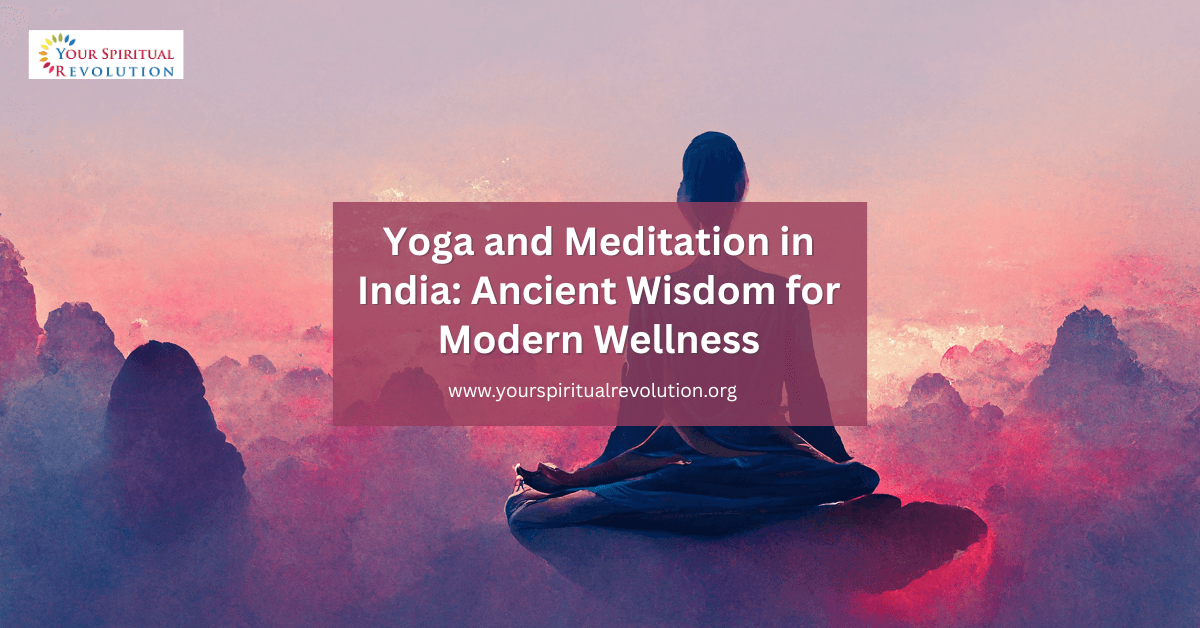
India, a land rich in spiritual heritage, has gifted the world profound practices like Yoga and Meditation. These ancient disciplines, deeply rooted in its philosophical traditions, offer pathways to physical well-being, mental clarity, and spiritual growth. This article delves into their historical journey, core principles, and lasting influence, revealing how India’s wisdom continues to inspire global wellness movements.
The Sacred Origins and Enduring Legacy of Yoga and Meditation in India
The tapestry of Yoga and Meditation in India is woven from threads of profound antiquity, stretching back far beyond recorded history. While precise origins are often shrouded in the mists of time, archaeological evidence suggests contemplative practices were present even in the pre-Vedic era. Seals unearthed from the Indus Valley Civilization (circa 2500-1900 BCE) depict figures in meditative postures, some reminiscent of a proto-Shiva, indicating a nascent understanding of focused introspection and possibly early forms of asceticism. This foundational period laid the groundwork for spiritual inquiry, hinting at a connection between bodily discipline and mental states.
Moving into the Vedic period (circa 1500-500 BCE), the earliest hymns of the Rig Veda offer glimpses of ascetic practices (tapas) and rishis (seers) engaging in intense introspection to gain spiritual insight. However, it was with the emergence of the Upanishads (circa 800-400 BCE), profound philosophical treatises that form the concluding part of the Vedas, that the theoretical and experiential underpinnings of Yoga and Meditation truly began to crystallize. Here, concepts such as Brahman (the ultimate reality), Atman (the individual self), karma, samsara (the cycle of rebirth), and moksha (liberation) were systematically explored. The Upanishads emphasize the unity of Atman and Brahman and advocate for inner knowledge and meditative realization as the path to liberation, shifting focus from external rituals to internal spiritual experience.
The subsequent ascetic movements of the Shramana traditions, particularly Jainism and Buddhism, which arose around the 6th century BCE, further refined and systemized meditative practices. Jainism, through the teachings of Mahavira, placed immense emphasis on intense meditation (dhyana), self-purification, and strict ethical conduct (ahimsa) as means to achieve omniscience and liberation from the cycle of rebirth. Buddhism, founded by Siddhartha Gautama, centered its path to enlightenment on meditation techniques like Samatha (calm abiding) and Vipassana (insight meditation), fostering mindfulness, concentration, and wisdom to overcome suffering. These traditions, while distinct, contributed significantly to the vast body of contemplative knowledge in India.
The classical formulation of Yoga reached its zenith with Patanjali’s Yoga Sutras, likely compiled between 200 BCE and 400 CE. This seminal text codified the eight limbs of Ashtanga Yoga (Yama, Niyama, Asana, Pranayama, Pratyahara, Dharana, Dhyana, Samadhi), providing a practical and philosophical framework for achieving citta vritti nirodha – the cessation of the fluctuations of the mind – leading to a state of profound stillness and realization. Patanjali’s Yoga is fundamentally a path of meditation and detachment, rooted in the philosophical system of Samkhya, aiming for the liberation of the individual consciousness (Purusha) from material nature (Prakriti).
Throughout various Hindu schools, Yoga continued to evolve, influencing and being influenced by traditions like Vedanta, Tantra, and Bhakti. While the Upanishads, the Bhagavad Gita, and Patanjali’s Yoga Sutras laid the philosophical and practical foundations, subsequent texts and lineages explored diverse methodologies. It is crucial to distinguish this traditional understanding of Yoga, primarily focused on spiritual liberation through mental discipline, ethical living, and meditation, from the modern, globally popularized forms that often emphasize physical postures (asanas) for health and fitness. India, unequivocally, stands as the cradle of these transformative practices, offering an enduring legacy of profound self-inquiry and spiritual discipline that continues to resonate globally, pointing towards an inner journey of awakening that transcends centuries and cultures.
Conclusions
In essence, Yoga and Meditation, born from India’s ancient wisdom, represent timeless tools for inner harmony and holistic well-being. From their earliest philosophical foundations to their modern global embrace, these practices continue to offer solace, strength, and self-discovery. Embracing these traditions allows individuals worldwide to connect with a legacy of profound self-awareness and mindful living.